Powered By Blogger

Sunday, 11 April 2010

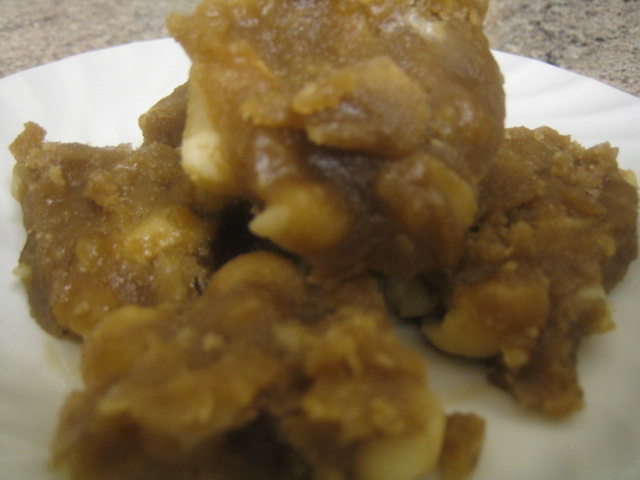
Nutty orange toffee pieces - Nketia cake

I've decided to lay off the savoury tone of the blog for a couple of recipes (maybe?) so here we have a sweet dish, one which I've only eaten once or twice as a wee lad in gray knee highs with ashy elbows. After thinking about  the ingredients and how to make it, I thought, 'It's just too easy', but my Mum assured me it's a Ghanaian classic and for the very ease of preparation I should definitely include it in the blog - Well, no more convincing needed on my part, so here it is!


Ingredients

3 tbsp soft brown sugar
Large knob butter/margarine
1/2 tsp salt
1 tbsp fresh orange juice
1 heaped tbsp of crushed macadamia nuts

Heat the brown sugar in a pan with the butter until boiling and bubbling, all the while stirring vigourously or until the consistency is smooth and brown like molten caramel. Add salt and stir until mixture starts to thicken and finally add nuts and the orange juice. Pour the mixture into a small dish and refridgerate until hard. In Ghana they form the mixture into small bite-sized balls once heated and the orange juice is a little creative aside, for this recipe I poured the mixture into a dish and once hardened I broke them up into small pieces. Perfect to pop into a bag for on-the-go nibbles.


Monday, 5 April 2010

Goat chichinga and sweet potato fries with a shito salsa

I first tried chichinga when I visited Ghana as a child. I recall walking up to the man who sold them at the side of the road near my Uncle's bungalow and exclaiming quite proudly, 'I want 50 cedis kebabs!' Imagine saying that as a pompous eight year old and you can envisage how the vendor probably wanted to roast me on the grill. After paying, I was literally given a bag of about 40 hot and spicy chichingas - for 50 cedis- it's like buying a car with the change from a pint of milk. Wow, one devalued currency meant one happy kid!

As you can see from the picture on the right, these are SERIOUSLY saliva inducing and they're just so easy to make! Chichinga (pronounced che - ching - aah) can be made from a variety of different meats like beef, guinea fowl, chicken and liver and are prepared on skewers similar to the ubiquitous kebab. The typical coating of chichinga combines cornmeal with ginger, chili and grounded peanuts and the finished product is quite firm. I've given my chichinga's a slightly creative egde by using thyme and paprika and teaming them with crisp, sweet potato fries dusted with cumin and a chunky shito salsa which is a fiery Ghanaian condiment eaten with a number of traditonal recipes. So, here's my version and you'll need the following -

Ingredients

200g goat meat cubed           A generous sprinkle of salt         
1 small red onion                 1 tbsp crushed peanuts
1 small green pepper            For the fries
For the marinade               1 sweet potato
1 tsp hot paprika                  1/2 cumin
1/2 tsp peanut/seasame oil    200 ml virgin olive (approx)
1/2 tsp hot cayenne pepper   For the shito
                                                       1/2 tsp black pepper             1 tomato
                                                       3 springs of fresh thyme         1 scotch bonnet pepper
                                                                                                    1/2 small white onion
                                                                                                    A pinch of rock salt
Extras - wooden kebab skewers.

Start this recipe by cubing the goat meat into nice bite sized pieces and set aside. Combine the paprika, cayenne, black pepper and sesame oil together in a bowl. Chop up thyme and add to the mixture and then add the goat meat and coat evenly. Using sesame oil lends a rich, nutty undertone to the meat which works deliciously with the intensity of the paprika and pepper - YUM!. Leave to marinade for 1/2 hour. In the meantime, peel the sweet potato and cut into thin slivers and place in a large bowl of water, pop your skewers in the bowl of water as well and leave until time to cook. Placing the potato in water before cooking removes the starch so will result in a nice, crisp fry and immersing the skewers in water prevents them from charring under the grill. While the meat is marinading, you can prepare your shito salsa. Chop up your tomato and onion into large pieces and add to a blender along with the scotch bonnet pepper and blend into a chunky pulp, remove and place in a bowl and sprinkle with salt and then refridgerate.
Your kebabs should now be ready for the grill. Grab your red onion and green pepper and cut into small pieces. You may need to snap your skewers in half if they're too long! Alternate the veg with the meat along the skewers. Once done place on a sheet of foil and place under the grill for 5 minutes on each side, a minute less if you like them particularly rare. Now you're ready to fry the potatoes! Half fill a pan with oil and heat until very hot; drop in small batches of potato and fry until golden brown, remove and place in a bowl lined with kitchen paper to absorb excess oil and place in the oven. Repeat method until finished. Cover potatoes with cumin and mix together, add salt if desired and then devour like no one's looking! So, what do you think?


.

Friday, 26 March 2010

Kickin' Kontomire stew

I bought most of the ingredients for this dish from a cute, little Ghanaian run shop in Brixton market - all hip life music, 4 for a pound plantains and nonchalant service. My intial inquiry for cloves with the shop assistant went like this:
Me- Erhem, do you stock cloves? (I inquired in the way you do when you're from Kingston upon thames)
Man (chewing a tooth pick, points to the shop next door selling clothes. I follow his direction.
Me - Oh, no, not clothes - cloves
Man - (looking blank)
Me - .....for kelewele?
Man - What? (still blank)
Me - No worries, I'll jog along (man looks at me increduously like i'm speaking Hebrew)....oh dear!


Pronounced kon-tome-ray, this stew originates from the Ashanti region of Ghana and is packed full of nutrients ideal to ward off those last remaining winter niggles. Add an extra sctoch bonnet for added chili punch.


Ingredients - serves 2-3
1 large bunch of Coco yam leaves or Spinach leaves
2 tbsp of grounded egusi (melon seeds)
150 ml palm oil
 - the above can be obtained from any well stocked African market,
if in doubt, head for Brixton
3 cloves garlic
I medium sized onion
1 scotch bonnet pepper
3 tomatoes
150g Smoked Mackerel
1/2 tsp salt
50ml water

Right, start this dish by chopping up your onions and then set aside - I find something so familiar and comforting in the way that virtually all Ghanaian stews start off like this. Chop up the tomatoes, garlic  and scotch bonnet into rough pieces and add to a blender and puree. Wash the spinach or coco yam leaves thoroughly, cut stems off and place in a pan half filled with water and boil, once boiled remove immediately and leave to drain in a sieve. Next, take the onions and dry fry for a minute or two until beginning to soften, add palm oil and the salt and resume cooking for 3-5 minutes and then add tomato mix and the 50 ml water to the pan, leave to cook until the liquid starts to reduce. Any excess palm oil may rise to the surface, which you can always spoon out later. Add the ground egusi and gently mix; agusi thickens the sauce and adds a distinct nutty taste to the dish. Take a pestle and mortar and grind the spinach leaves into a pulpy consistency, draining any excess water and add to the stew. Flake off large pieces of smoked fish and add to the stew and gently mix, cover and cook for 10 mins on a medium heat. Serve immediately with fluffy white rice. So, is this stew Kickin'? You know what to do, get commenting!

Tuesday, 16 March 2010

Ghana reflections part I

I've been thinking of holidays lately for a number of reasons - the need for a recuperative respite, the up-coming holiday season and not forgetting it's coming up to two, long, sun starved years since I last boarded a plane; yeah, I know, not exactly cause to throw myself into the nearest Thomas Cook, but still, it'd be nice to venture abroad. So, I 've decided to feed my holiday hunger by pouring over my holiday snaps from Ghana '06. It was my first time visiting as an adult having been as an eight-year-old, so I was now able to fully appreciate what Ghana had to offer. Here are some of my favourite snaps.


I love this shot, it's just so evocative and encapsulates everything about a typical Ghanaian sunset: the warmth of the setting sun that you can almost feel through the photo, the calm of the surf and the fishing boats docked on the sandy banks - visual poetry.

The picture below was taken at the madness that is  Makola Market, a entity of staggering proportions, a place Ghanaians can shop for home goods, food, car tyres or an impromptu new hair do - Ghanaian braids, extensions...buzz cuts...take your pick.
I love how the vivid colours of these palm nuts take centre stage surrounded by muted greens and the rough, dull surface of the ground.

Wednesday, 10 March 2010

Kelewele

Kelewele is as Ghanaian as it gets - along with Kente cloth, cocoa beans and dilapidated taxi's. On any given day, as dusk falls, thousands of vendors acorss the country fire up their mobile ovens to make this classic dish for the hungry masses. I love dusk, but nightfall in Ghana is special, against a back drop of a tropical setting sun, you'll find the beat of hip-life music jostling with the aroma of frying chichinga, while noisy crowds make their way home - it's intoxicating and crazy all in one unique way.

This particular version of Kelewele is one I've grown up with, a tasty snack my Mum would make as a starter to a traditional Sunday roast, it pairs excellently with dry, roasted peanuts and Songs of Praise!

Ingredients 

2 medium sized plantain (part ripe and yellow is best)
1/2 tps salt
1/4 of a minced onion
1 tsp grated hot ginger
1 tsp crushed cloves
1 tsp cayenne pepper
1/2 tsp nutmeg
1/2 tsp cinnamon
2 tbsp warm water

Start by peeling your plantains and cutting in half and then again length wise. Holding the knife at an angle, slice the plantain into small pieces and place into a large bowl. Using a rolling pin, cover cloves in cling film and crush into a crumbly consistency and add to a small bowl. Next, mince, ginger and onion and add to the cloves along with the pepper, nutmeg, cinnamon, salt and water and mix into a paste. If you want your Kelewele particularly spicy, add an extra 1/2 tsp of cayenne pepper. Grab a large spoon and mix up the plantain roughly, this will give a nice, crispy finish to the plantain and then leave to stand for 15 minutes.
Heat one inch of oil in a pan until hot and in small batches add plantain to the oil with a slotted, metal spoon ensuring the pieces are not touching. Fry until golden brown and place in a bowl in a pre-heated oven to maintain temperature. Repeat the process until plantain is finished. A great snack for any day and any occasion - it's the closest thing to being transported to a roadside vendor in Accra!


Saturday, 27 February 2010

Peanut soup with rice balls

There are so many ways to make this recipe and mine's no different - a few tweaks, an ad-hoc addition or two, coupled with an hour lovingly stirring, chopping and sieving and you have my rendition of possibly my favourite Ghanaian comfort food - peanut soup with rice balls. Taste wise there are many layers to this dish - the buttery smoothness of the peanut with the underlying kick of pepper rounded with a delicate hit of garlic. It's really easy to make, so roll up your sleeves and get cooking! Results and comments always appreciated.

The Goodies
                                                            200g white rice
300g goat meat                                    2 1/2 tsp salt
2 cloves garlic                                      1 tsp black pepper
2 scotch bonnet peppers                      3 tbsp smooth peanut butter
1 medium sized onion                           1 tbsp tomato puree
4 fresh tomatoes                                  Crushed peanuts (handful)
A bunch of Okra                                  Half red pepper for garnish
1 vegetable stock cube                         850 ml water

Start by chopping your goat meat and onion into largish pieces and adding to a large pot along with 1 tsp of salt and 1 tsp of black pepper and the 2 peppers; mince the garlic cloves nice and finely and chuck in. The trick is to dry fry the lot WITHOUT oil for about 5 - 10 minutes on a medium heat, the fat from the meat will provide the juices to fry the mixture. Next, add your tomatoes whole to the pot with the stock cube and gently pour in 700 ml of water and bring to the boil (smells good already, right?) Once boiling, add tomato puree and the peanut butter, leave on a medium/high heat for 10 minutes, stirring gently intermittently.

On a separate hob, add rice to a pot and cover with water and boil until water has evaporated and remove from stove. The rice should be a dry, sticky consistency when the water has dissipated, if not, cook a little longer with a small amount of water to achieve this. Meanwhile, remove tomatoes from soup and mash the tomatoes through the sieve, extracting all the juice until the skin remains and then discard. Add the okra at this point, the remaining salt and 150 ml of water, return to a medium heat for about 10 minutes. With a potato masher, mash the cooked rice until sticky and then form into medium sized balls with fingers. Ladle spoonfuls of soup into bowls and garnish with the red pepper and crushed peanuts. Pile rice balls into a small bowl, the idea is to dunk the rice into the soup, but I love to break them apart and stir them through the broth. The recipe is for 3-4 people, so ideally invite some friends around, or if you just can't bare the thought of parting with your peanut soup, freeze the rest. So, followers, what do you think?

Sunday, 14 February 2010

Grilled chilli ginger snapper with Jollof rice


The second recipe of HP doesn't need much introduction to those in the know about Ghanaian food, but for those newbies and lurkers amongst us it's easy enough to whisk up, using simple, fresh ingredients and a bit of time in the ktichen. Snapper and Tilapia are a staple fish in Ghana whilst Jollof rice is the Paella of West Africa, eaten with just about everything and each country has its own rendition.

Ingredients


1 medium to large red snapper
1 large clove of garlic
1/2 tps freshly grated hot ginger (easily obtained from any African market, although standard ginger will suffice)
1/2 tps hot chili flakes (a touch more, if you like it hot!)
1 tbs peanut/ground nut oil
1 tbs water
Generous pinch of salt and black pepper.


For the rice


250 grams long grain rice
1 250 gram carton of sieved tomaotes
1 finely chopped white onion
1 level tps salt
1 tps black pepper
1 tps ground coriander
1/2 green or yellow pepper.

Begin by washing and liberally covering the snapper with the salt and black pepper, making sure to cover the inside of the fish. Grate the ginger and garlic into a small bowl and add the chilli, oil and water and mix together. Brush mixture over fish and begin grilling for about 15 minutes on a bed of foil on a medium heat making sure to turn halfway.

For the rice, start by finely dicing the onion and adding to a large pan and then frying in a little oil until onions start to soften slightly. Next, add the carton of tomatoes, then add the salt and black pepper and ground coriander to the pan and heat for roughly 5 minutes on a medium heat and stir once to prevent sticking.
Boil 500 ml of water and add to the pan along with the rice, turn the heat up a notch, stir and cover. Now, check periodically as the rice will absorb the water and tomatoes turning a deep orange, this usually takes around 20 minutes, but times can vary slightly. Be careful to stir the rice only once or twice during cooking time, or the rice can become mushy. Add the chopped peppers with 10 minutes of cooking time left. Don't forget to check the snapper!

As an addition, I like to add a splash of colour in the way of a really quick and easy salad of tomatoes and red onion. Simply chop a bunch of cherry tomatoes and a small red onion and add to a bowl, sprinkle generously with aromat seasoning and 1 tbs of garlic oil and a handful of freshly chopped coriander. Of course this dish is delicious, but aesthetically, I love the riot of earthy, fresh colours - the contrast of the deep orange Jollof rice with the crispy speckled skin of the fish.